Modules
This section explains how to upload and manage module packages through the UI.
Adding a Module Package
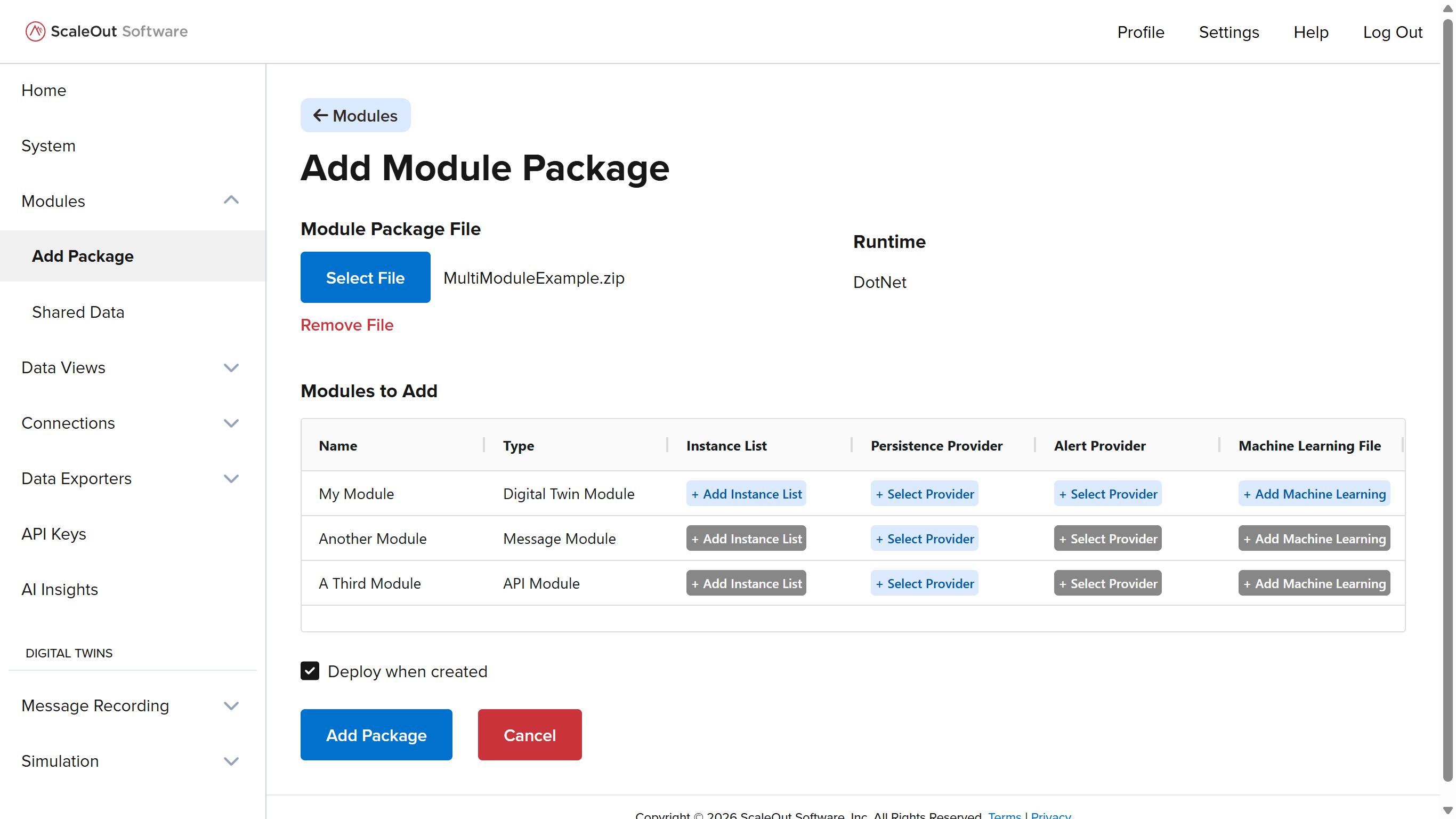
To add a module package, first click the + Add Module Package button on the home screen, or go to Modules > Add Package in the left navigation.
Click Select File and locate the module package file to upload. The table will show a list of all modules in the package and the available options based on the runtime and module type.
Note
All settings shown in the table are optional. You can deploy a module package with or without any of these options.
Adding an Instance List
Supported for: Digital Twin modules, all runtimes.
To initialize a module with an instance list, click the + Add Instance List button in the table row. In the modal window, select an instance list CSV file and select modules to apply the instance list, then click Save. The instance list filename will appear in the table for the selected modules.
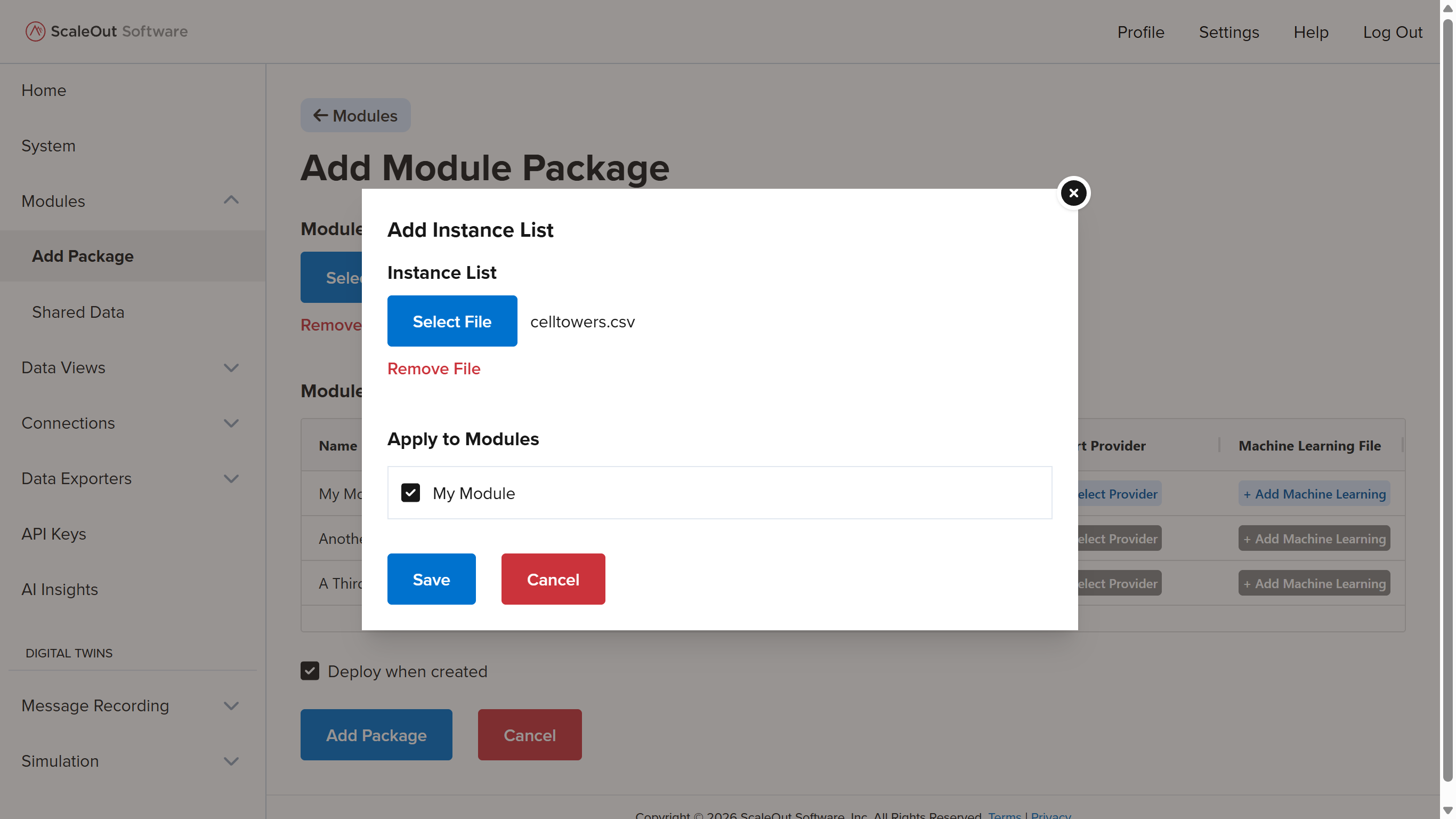
To remove an instance list:
Click on the filename in the table.
In the modal window, click
Remove Filebelow theSelect Filebutton.Under Apply to Modules, select the modules for which you would like to remove the file.
Click
Save.
Choosing a Persistence Provider
Supported for: All module types and runtimes.
To add a persistence provider for a module, click the + Select Provider button in the table row. In the modal window, check Use Persistence Provider. Then select a persistence provider and backing store policy from the dropdown lists. If the backing store policy includes Write-behind, enter a write-behind interval in seconds. Choose the modules to apply the persistence provider settings, then click Save. The persistence provider name will appear in the table for the selected modules.
Note
If there are no persistence providers in the system, you can add them on the Connections page.
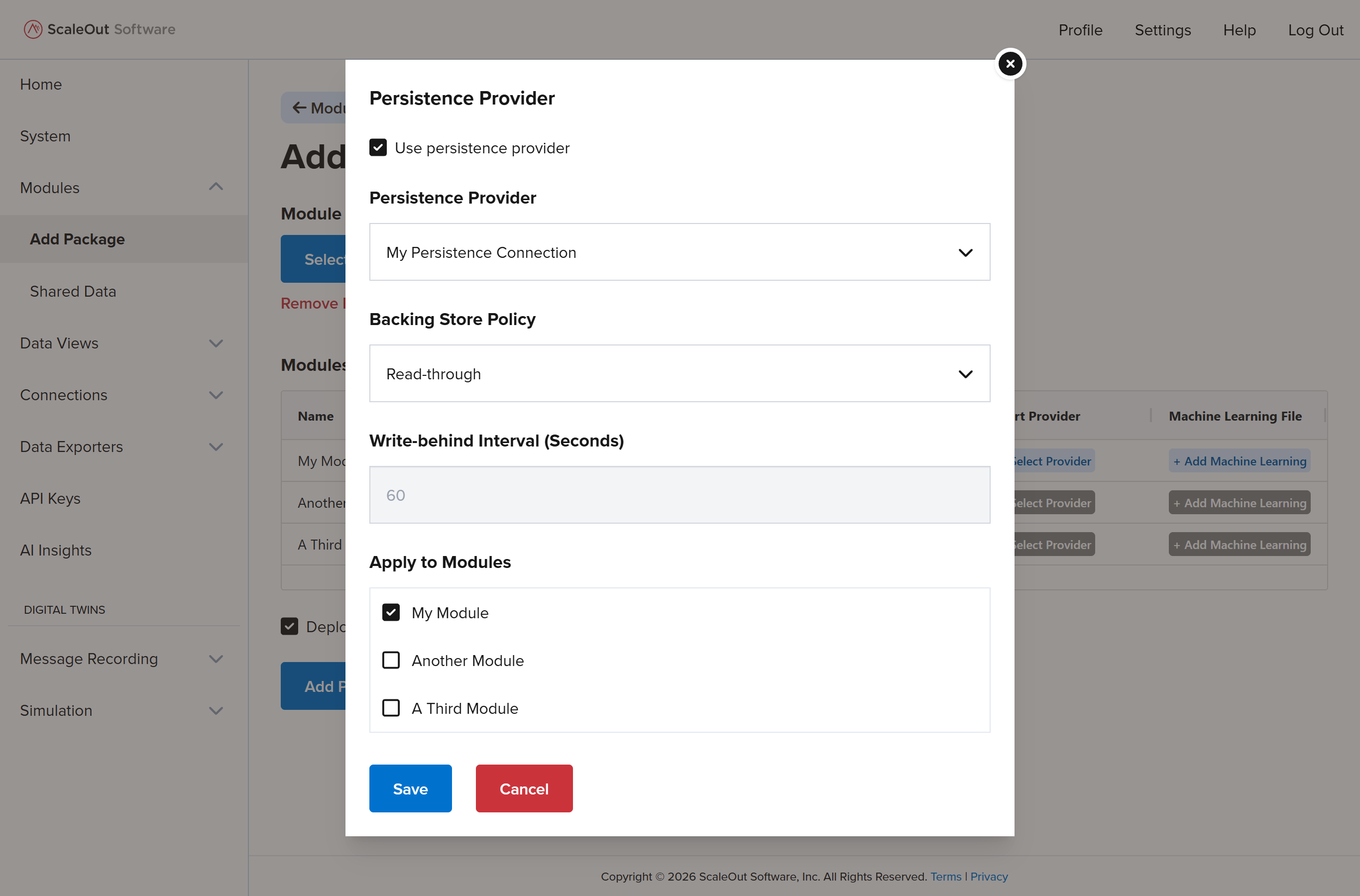
To remove a persistence provider:
Click on the persistence provider’s name in the table.
In the modal window, uncheck
Use Persistence Provider.Under Apply to Modules, select the modules for which you would like to remove the provider.
Click
Save.
Choosing an Alert Provider
Supported for: Digital Twin modules, all runtimes.
To add an alert provider for a module, click the + Select Provider button in the table row. In the modal window, check Use Alert Provider. Then select an alert provider from the dropdown list. Choose the modules to apply the alert provider, then click Save. The alert provider name will appear in the table for the selected modules.
Note
If there are no alert providers in the system, you can add them on the Connections page.
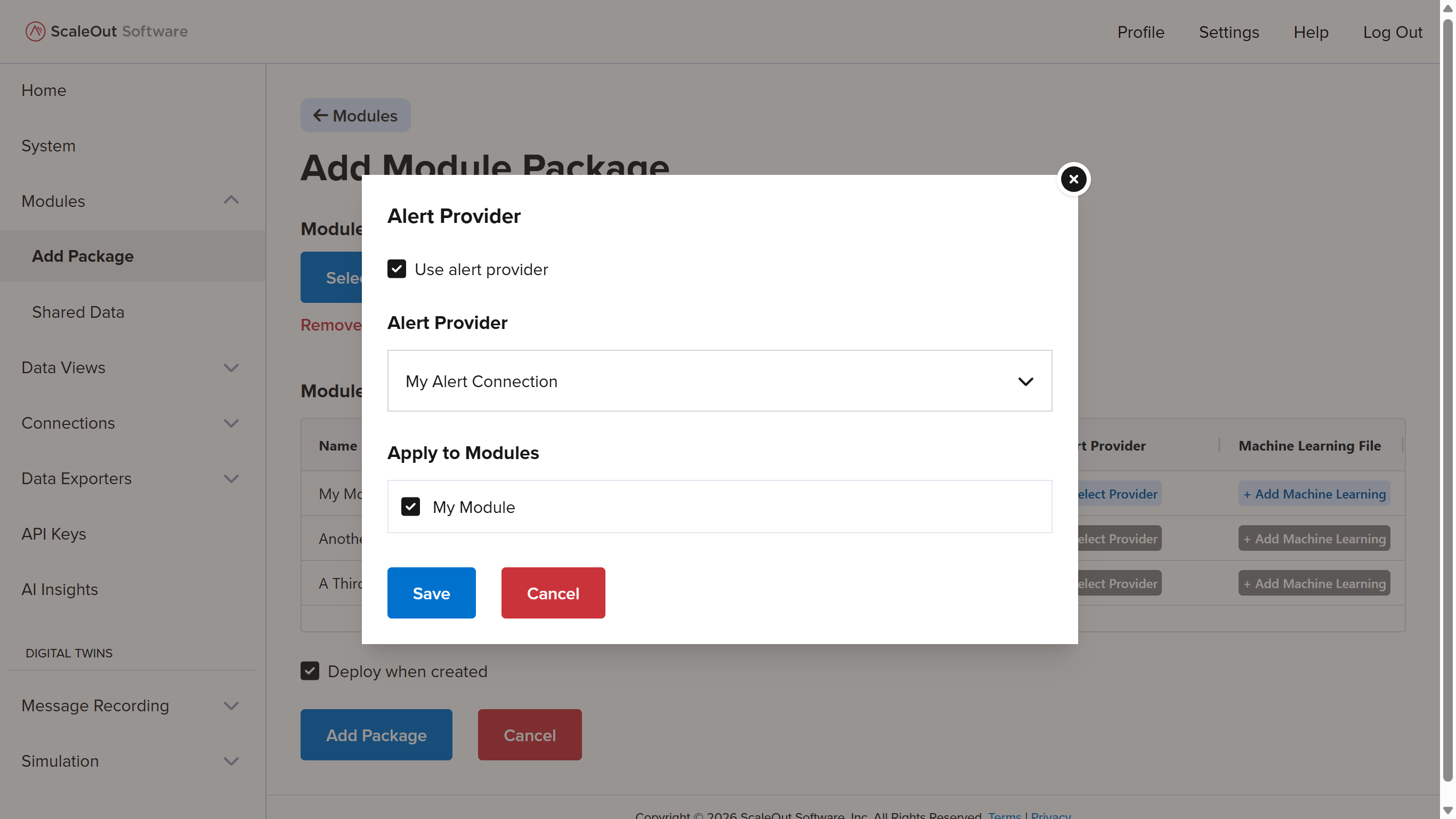
To remove an alert provider:
Click on the alert provider’s name in the table.
In the modal window, uncheck
Use Alert Provider.Under Apply to Modules, select the modules for which you would like to remove the provider.
Click
Save.
Adding a Machine Learning File
Supported for: DotNet Digital Twin modules*
* Rules-based modules can have a built-in machine learning algorithm; no separate file upload is required.
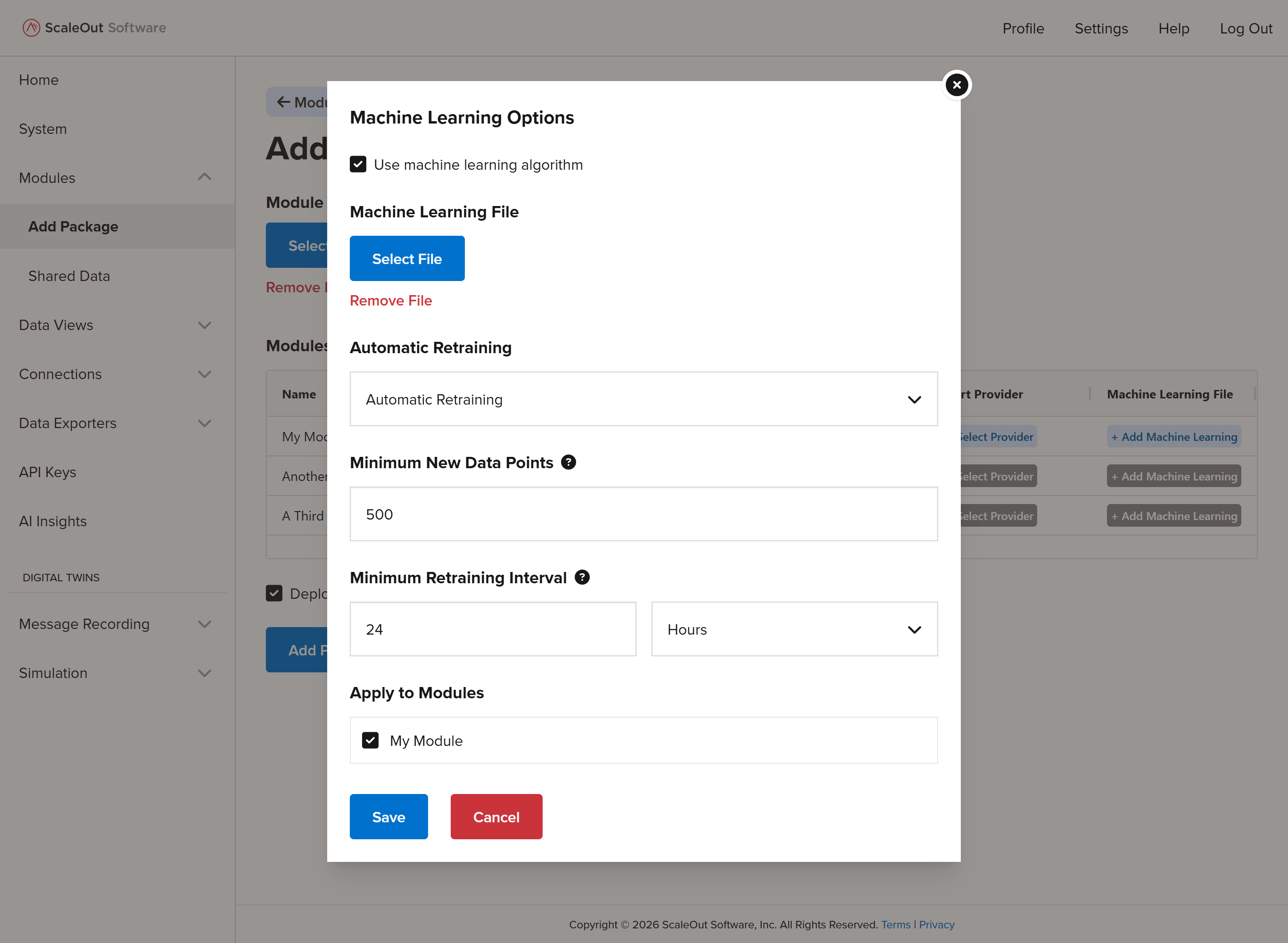
To add a machine learning file for a module, click the + Add Machine Learning button in the table row. In the modal window, check the Use Machine Learning Algorithm checkbox. Select a machine learning .zip file produced with the ScaleOut Machine Learning Training Tool. Choose the level of automatic retraining and, if applicable, specify the minimum number of data points to gather and the minimum time interval between retrainings.
Note
Some algorithm types do not support automatic retraining. In this case, you will see a message in the UI and will be able to choose No Retraining or Gather Data Only for the retraining level.
To remove a machine learning file:
Click the file name in the table.
In the modal window, uncheck
Use Machine Learning Algorithm.Select the modules for which you would like to remove the file.
Click
Save.
Deploying a Package
When you have finished configuring the module settings, click Add Package to finish adding the package to the system. By default, Deploy when created is selected, so the package will be deployed when it is added. If you wish to add a package without deploying, you can uncheck this box.
Managing Module Packages
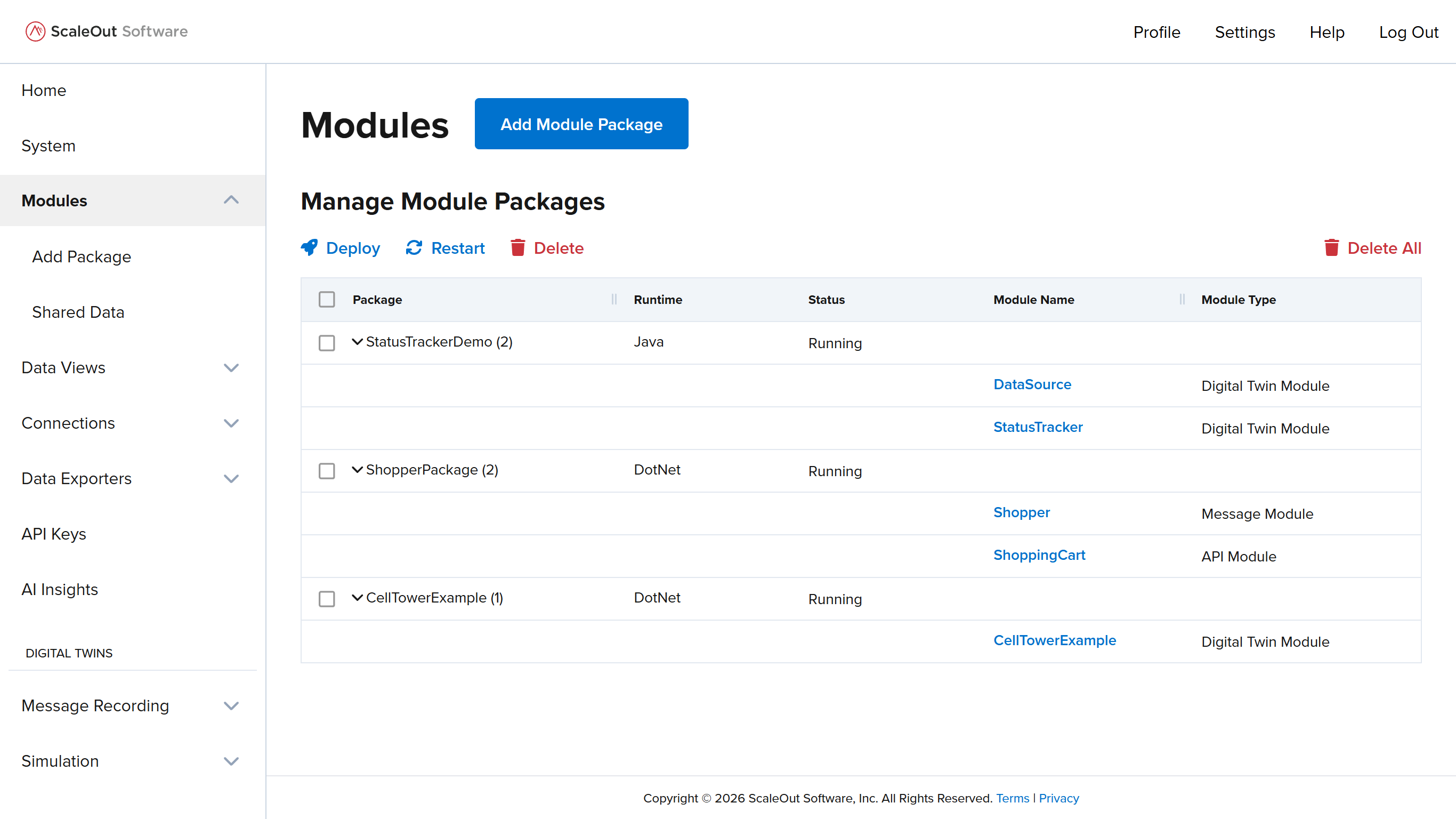
To see all module packages in the system, visit the Modules page by clicking the link in the sidebar. The table shows all module packages, along with their status and runtime. Click on a row to expand it and view all modules in the package.
To deploy, restart, or delete one or more packages, first make a selection using the checkboxes in the left column of the table. Then use the buttons above the table to perform the operation.
Viewing Module Details
To view more details about a module, click on its name in the Manage Module Packages table. You can then view information about the module’s status, instances, machine learning algorithms, and AI property descriptions.
Note
The tabs shown for each module will vary based on which features are supported for the module’s type and runtime.
Module Status
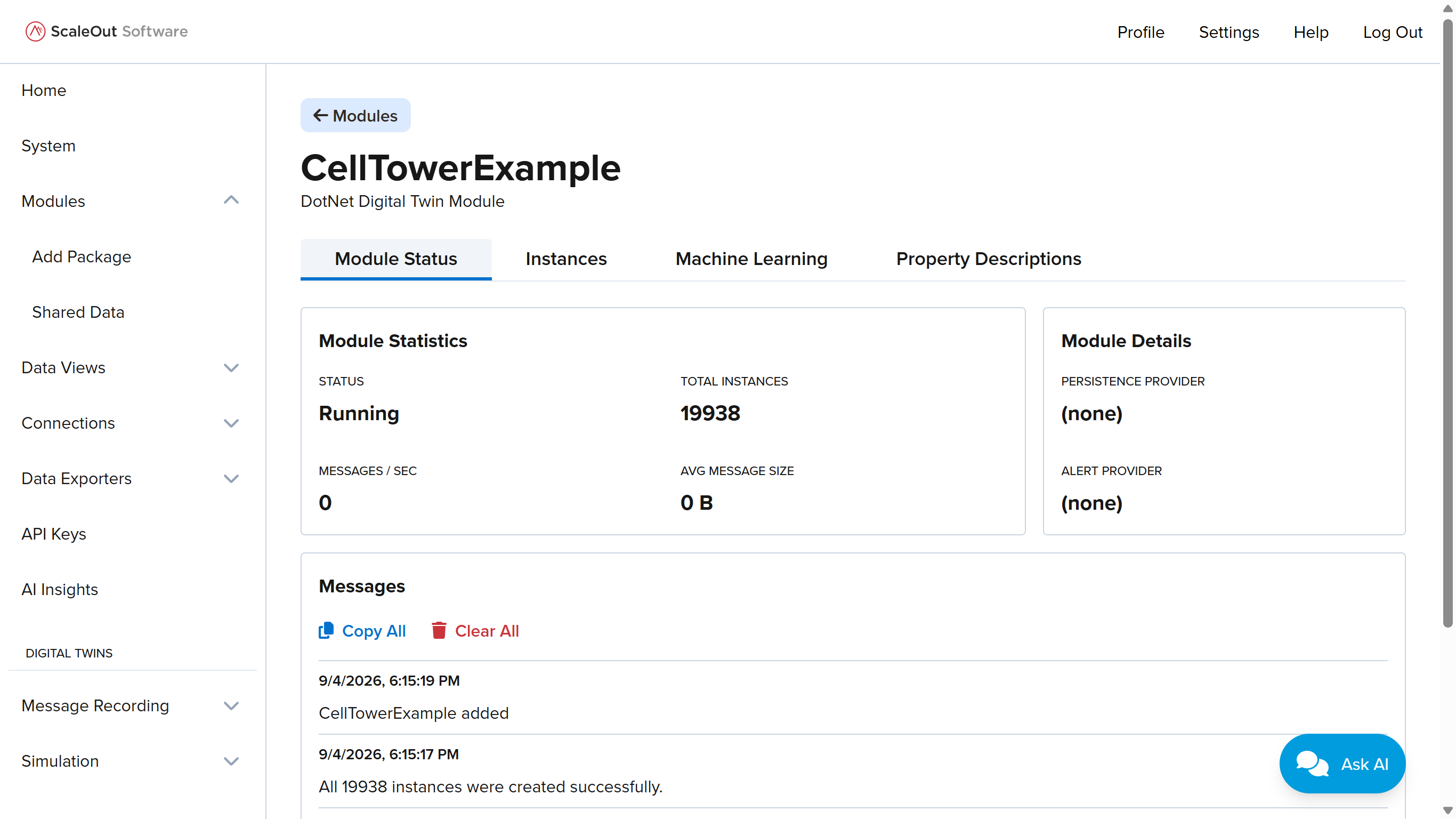
This tab shows the module statistics, associated persistence and alert providers (if any), and a list of messages.
Instances
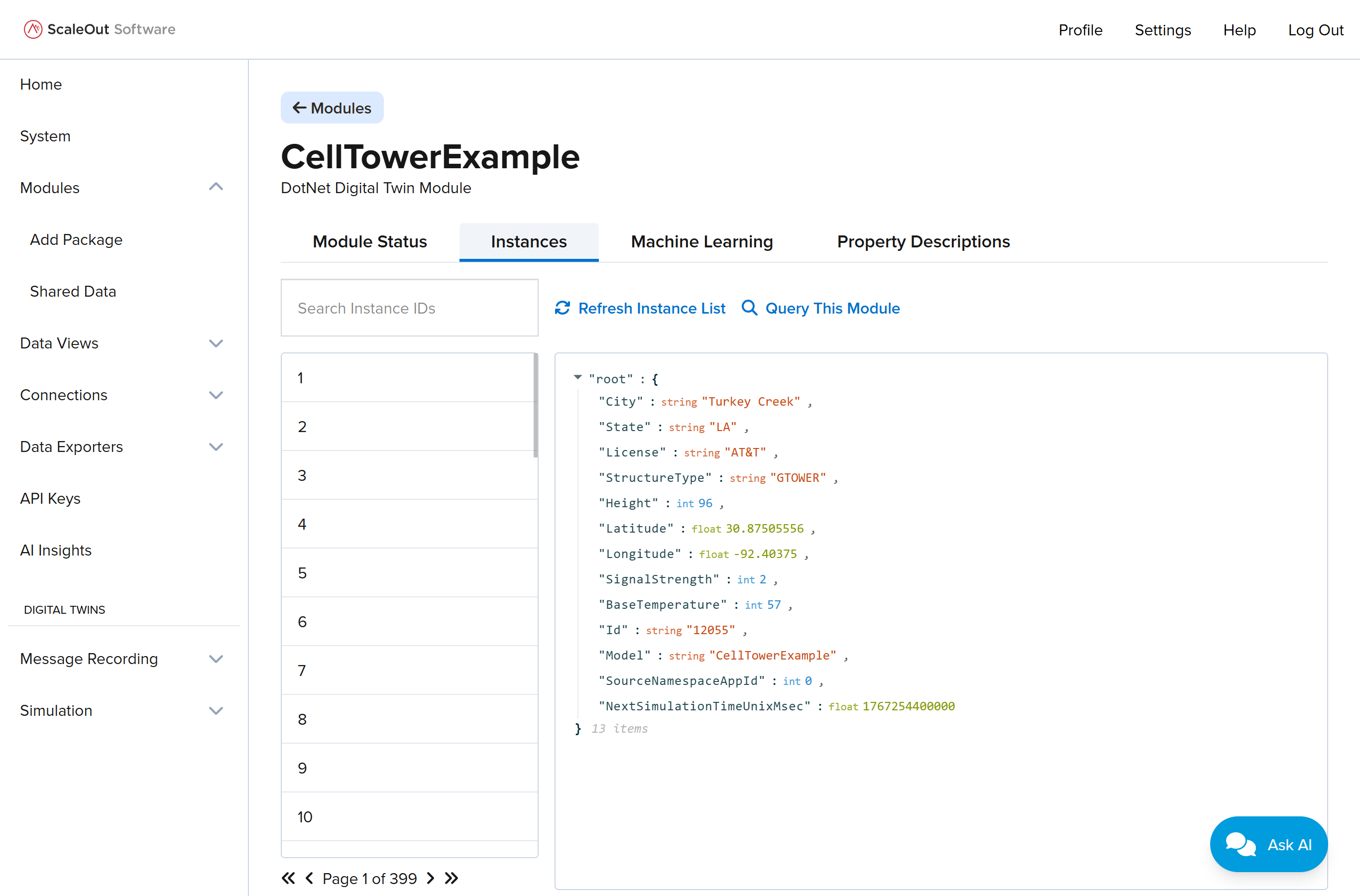
This tab shows a list of instances for the module. To view instance details as JSON, click the instance ID from the list at left. You can type an instance ID in the search bar to search for instances by ID. Click the Refresh Instance List button to update the list with the latest data or Query This Module to create a new query.
Machine Learning
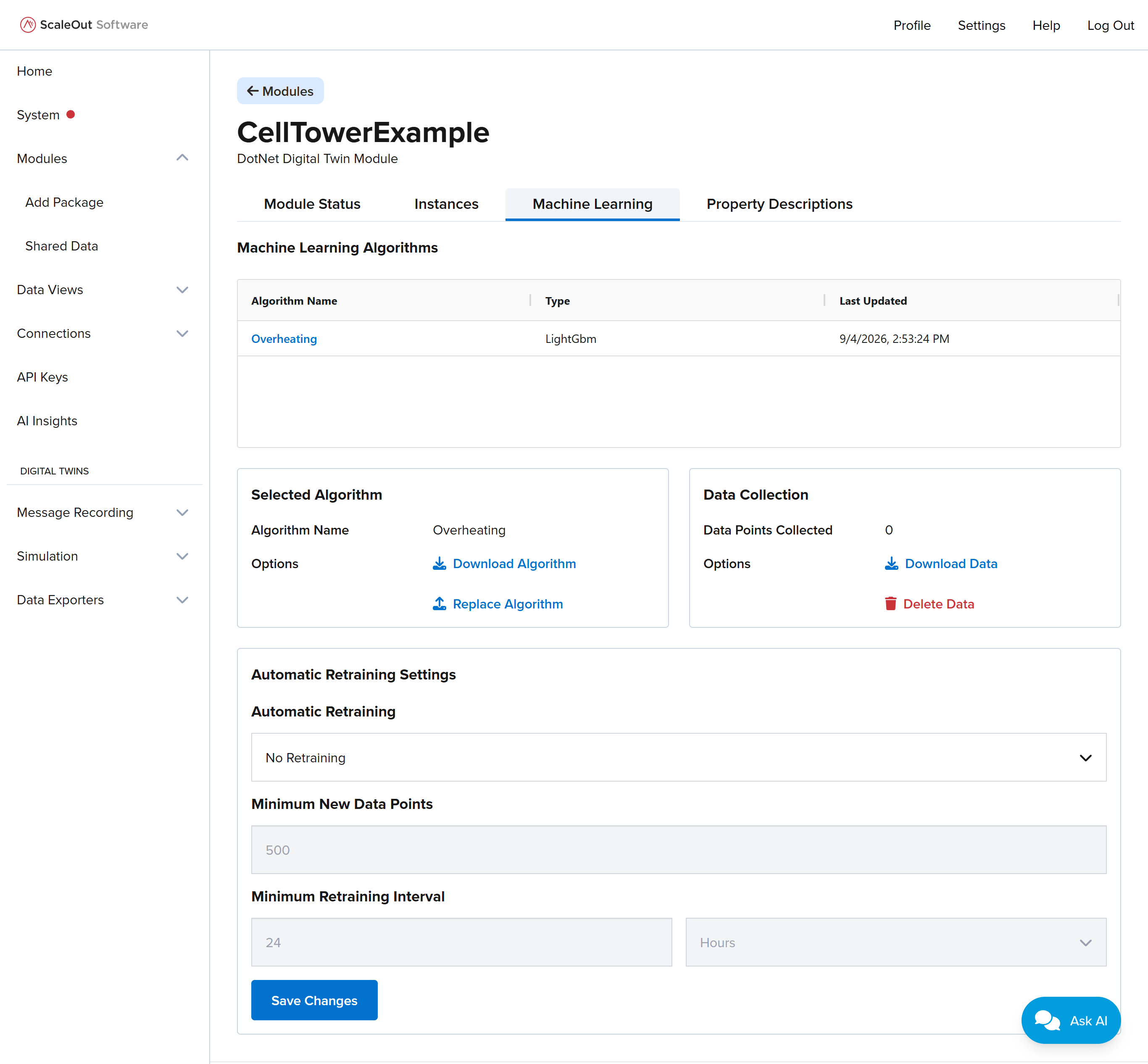
This tab shows details about the machine learning algorithms associated with the module along with options for managing them:
To view and edit an algorithm, click its name in the table.
To download an algorithm file, click the
Download Algorithmbutton under Selected Algorithm.To replace an algorithm file, click the
Replace Algorithmbutton under Selected Algorithm and select a new file.To download the collected data, click the
Download Databutton under Data Collection.To delete all collected data, click the
Delete Databutton under Data Collection.To modify the automatic retraining settings, change the settings under Automatic Retraining Settings and click
Save Changes.
Property Descriptions
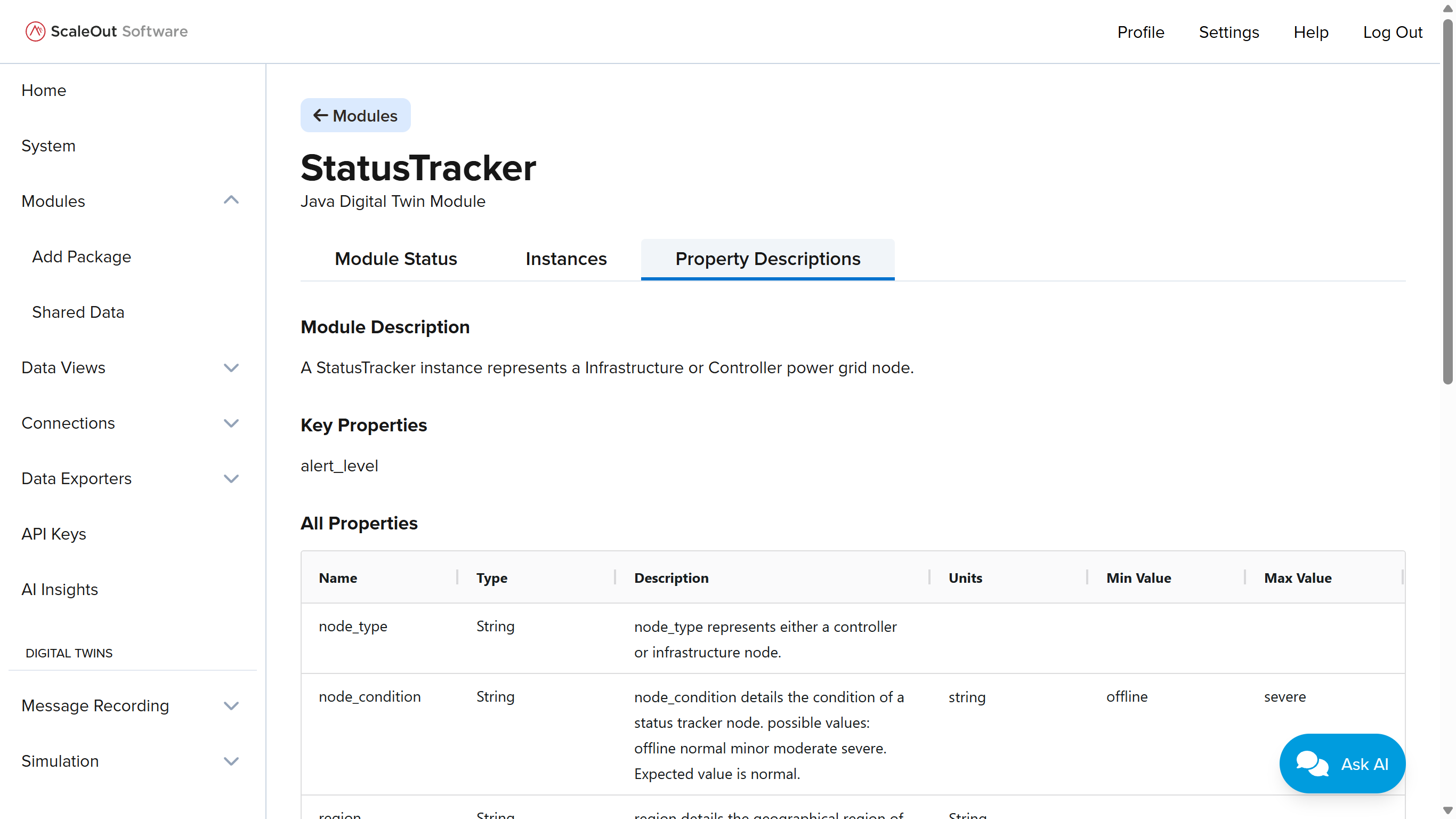
This tab shows the descriptive metadata that AI agents such as Claude have access to when interacting with the module.
Module Description: A high-level description of what the module represents or what it does.
Key Properties: The most important properties for the agent to consider when analyzing the module.
All Properties: A table listing all of the module’s properties with descriptions and other parameters.